Every vessel tells a story. In life and in death, the containers we choose for what and who we cherish carry deep meaning. Biodegradable urns, in particular, tell a story of renewal – of a graceful return to the earth while in harmony with the natural world.
Unlike traditional urns made from metal or ceramic, biodegradable urns are created from natural materials such as sand, salt, organic fibres and even grown from mycelium. These vessels are designed to break down gently over time, allowing ashes to be released back into the soil or water, completing a simple and natural cycle of return.
At KORU, we see these urns as an expression of our philosophy — that death care can be both meaningful and environmentally responsible. They reflect our values of sustainability, simplicity, and compassion, honouring the earth as we honour the life that has passed. There is symbolism and meaning in choosing a biodegradable urn along with unexpected emotional benefits.
For those wishing to explore green and natural memorial options, KORU offers resources and guidance to help you find what feels right and provides choices that align with your values.
Symbolism and Meaning
Choosing a biodegradable urn is, at its heart, an act of intention. It reflects a desire for simplicity, renewal, and continuity — a quiet acknowledgment that every ending holds the potential for new beginnings.
For many, this choice carries deep emotional and spiritual significance. There is comfort in knowing that a loved one’s remains will return naturally to the earth, becoming part of the living world once more. In this way, the act of letting go becomes both a release and a renewal and can be a gesture of care for both people and the planet.
Biodegradable urns also embody the idea that life continues in different forms. They become more than a vessel; they are a bridge between what was and what will be, a reminder that love and connection endure, even as form changes.
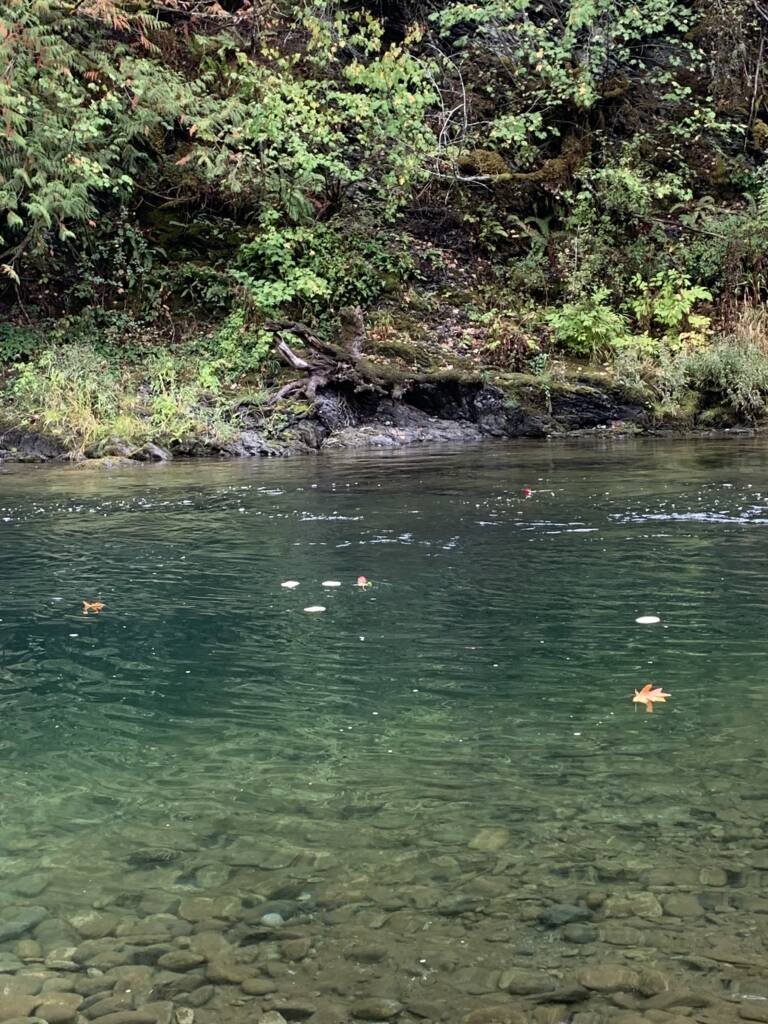
All of this was embodied with my family’s choice to use biodegradable urns when we were considering how best to honour and celebrate my elder sister after she died. We decided that an outdoor ceremony at our favourite swimming hole along the Cowichan River with family and friends would be truly fitting for her – the “water baby” of the family. My other sister and I prepared about 15 small biodegradable leaf and seashell shaped urns with a spoonful of our sister’s ashes in each one to distribute to the various family groups who would be with us. When the time came during the ceremony to release our sister’s ashes into the natural world, those of us with the bio urns walked a short distance up the rocky beach, the rest of the group were spread out along the rivershore. One by one we placed the tiny vessels into the river. My dad, who had waded out into the water, ushered each one into the current, ensuring that they would find their way. Roses were tossed in, a symbol of our love for our sister. There were smiles mixed with tears and, I know for myself, there was a tremendous sense of community with those who were present, a feeling of rightness in our actions and an emotional release created by the simple ceremony and the beauty and gentleness of our surroundings.
I am moved that through our work at KORU, we can honour this perspective for anyone who is open to it. We believe that the way we say goodbye can reflect the values we hold in this life — care, reverence, and respect for the natural world. By choosing thoughtfully, families can create a farewell that is both meaningful and gentle.
Emotional Benefits
Beyond their ecological value, biodegradable urns offer emotional comfort. Many families find peace in knowing their loved one’s ashes can be free in the world, rather than confined to one particular resting place. Ceremony and ritual easily compliments these acts of release and renewal as we seek to find ways to find acceptance at the deep loss we have experienced.
Depending on the kind of biodegradable vessel that is chosen and where it is placed, your loved one’s ashes might even nourish the living world they are in, offering us fulfillment that even in their ending, they are giving something back.
Choosing a biodegradable urn can also serve to spark heartfelt conversations within families and friend circles about legacy, responsibility, and the values we wish to leave behind. There is something deeply validating about knowing that one’s life values are maintained even once we are gone.
In this way, biodegradable urns embody both practicality and poetry as they unite environmental care with emotional healing.
Practical Insights: Traditional vs. Biodegradable Options
While traditional urns are often made from metal, ceramic, or different types of wood and are intended for long-term, permanent placement in a cemetery or in one’s home, biodegradable urns are designed for a natural return on land or in the water. Crafted from materials such as bamboo, sand, salt, tree bark fibers and mycelium, these urns gradually decompose when placed in soil or water, releasing the ashes to the natural world.
This natural process allows ashes to reintegrate into the environment in a gentle, organic way, which can be a meaningful contrast to the permanence of traditional urns interred in manmade cemetery structures. For those who wish to honour their loved ones while minimizing environmental impact, biodegradable urns offer a thoughtful solution.
We often associate the use of biodegradable urns with some form of “scattering”, but if your preference is to inter ashes in a cemetery it is recommended to check with your cemetery of choice ahead of time to avoid any disappointment. Some cemeteries accept biodegradable urns, particularly green and natural burial cemeteries, while others will not allow them.
The interest in sustainable and non-traditional death care options is growing. From natural burials to terramation (natural organic reduction), people are increasingly seeking ways to align their final choices with their life values — consciously and compassionately.
A Thoughtful Return
Choosing a biodegradable urn is more than a practical decision, it is a gesture of care, harmony, and intention. It reflects a desire to honour life, embrace renewal, and leave a gentle footprint on the world.
At KORU, we are honoured to support families in making these mindful choices. Whether you are exploring biodegradable urns, natural burials, or other green memorial options, our guidance and resources help ensure that each farewell aligns with your values, beliefs, and care for the planet.
By choosing thoughtfully, we can create memorials that are both meaningful and sustainable, both of which are gestures that celebrate life, honour legacy, and demonstrate our appreciation for the earth.
By Ngaio Davis